
Hull Maritime volunteer Julie Corbett was inspired by Anne Stathie’s recent blogs to share a family connection with the age of polar exploration.
My husband has a family heirloom. It is a medal that was awarded to his great grandfather, Thomas Oakley.
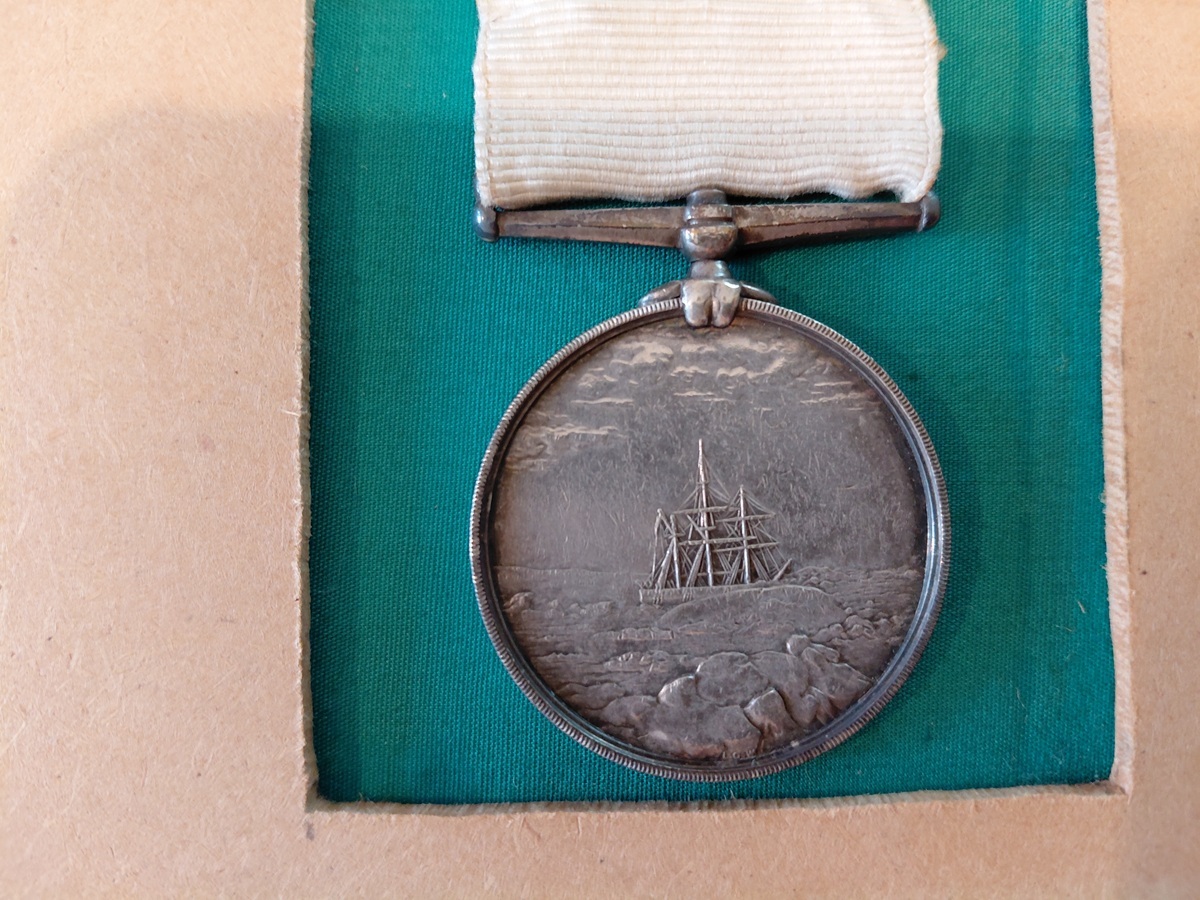
Until I read Anne Staithie’s three blogs on the Maritime Project website regarding links between polar exploration and Hull I had not given the medal much thought.
Anne Strathie is the author of A History of Polar Exploration in 50 Objects: From Cook’s Circumnavigations to the Aviation Age.
The cardinal points, east, west, north and south are major references for locating or orienting ourselves. Very important to seafaring when landmasses are out of sight. The history of exploring by land and sea is long and closely associated with the making of maps and charts. Trade routes, seasonal migrations of animals (fish, whales and seals important in Hull’s history) and the desire to explore has driven people to the extremes both geographically and physically.
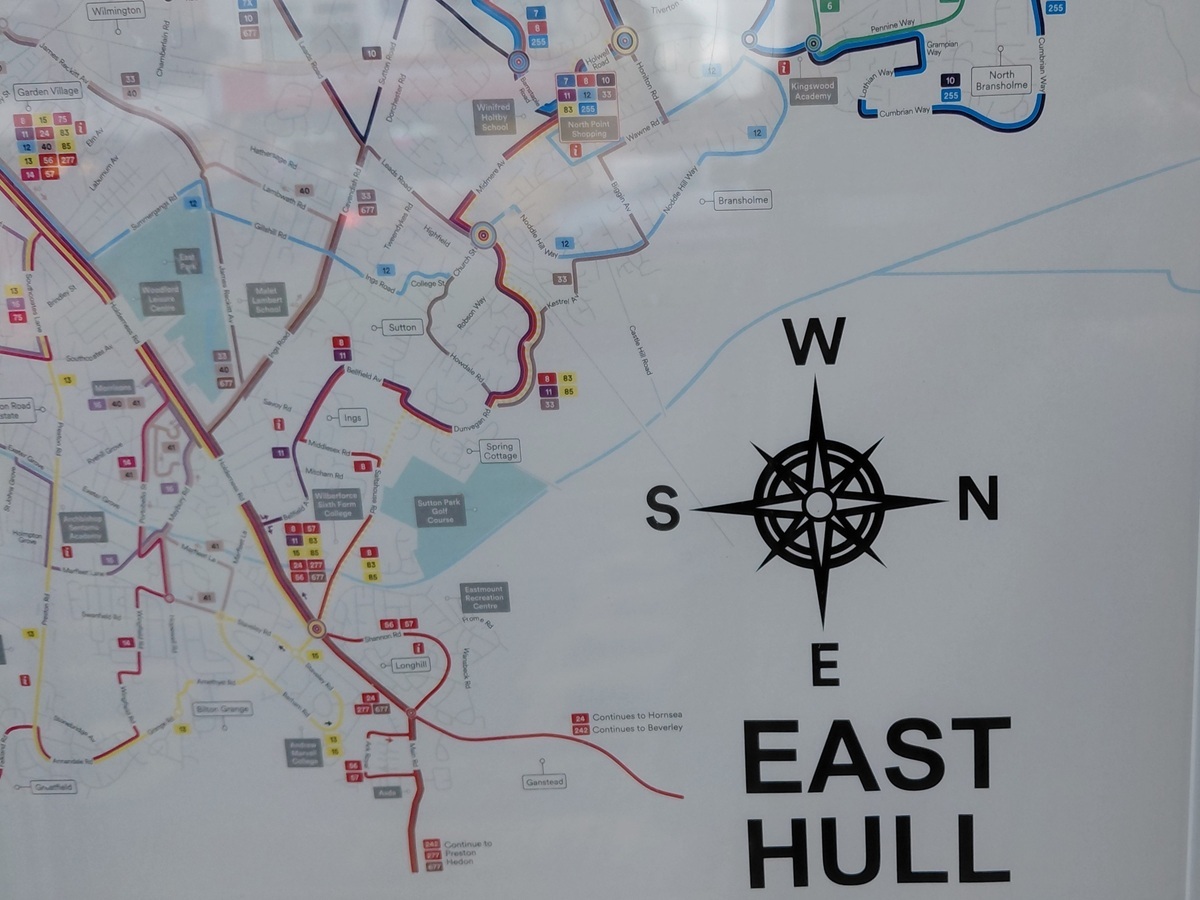
The stories of polar exploration are fascinating. Even for someone like me, who, if I am not in East Hull, I am lost or on a mystery tour.
It is in the last of Anne’s three blogs that the heirloom has a mention albeit in a later version of the item.
The first blog (which you can read here) details some Hull links to a1818 Admiralty-sponsored Arctic expedition.
One of the direct links to Hull is the ship, Isabella, launched from Hull in 1813 as a trading vessel. The British Admiralty hired her in 1817 and refitted her for an Arctic expedition. HMS Isabella was one of four ships that set out in May 1818 for Arctic waters. Commander John Ross (HMS Isabella)and Lieutenant William Edward Parry (HMS Alexander) were to sail into Baffin Bay and from there search out a ‘northwest’ passage to the Pacific Ocean. The other two vessels heading for the North Pole via Spitsbergen (hoping to eventually get to the Bering Straits and the Pacific). Neither party achieved this goal.
On release from the admiralty Isabella became a trading vessel again, then in 1824 entered the northern whaling fleet sailing from Hull.
The view of north Iceland in Figure 2 is the closest I have been to the Arctic Circle (still at least forty miles away). This was November 2019 when I went on a cruise to Iceland. My idea was to honour the memory of my grandfather who was an engineer on trawlers fishing sailing from Hull. Nowhere near polar conditions, our voyage was mostly calm weather. We did have a few hours confined to cabins during a storm and it was quite rough. Certainly, a time to reflect on how harsh conditions at sea can be.
The second of Anne’s (read here ) talks about some privately financed explorations of the Arctic. The object connected to Hull is In the Hull Maritime Collection. It is a copy of Benjamin Leigh Smith’s ‘Eira 1880’, His album of photographs from the May 1880 voyage undertaken on a specially designed steam yacht Eira. Leigh Smith’s voyages in the 1880s around Franz Josef Land (archipelago in the Barent Sea) were both eventful and productive. The quest of reaching the North Pole or finding a safe passage from the Arctic to the Pacific were unrealised but new sea and land charts along with accounts of the conditions were made.
It is in Anne’s third and final blog (here) that features the later version of the heirloom.

In Anne’s article ‘new-style’ polar medals were awarded to the Hull mariner William Colbeck (and his men) for the assistance in freeing the ship RRS Discovery of the British National Antarctic Expedition (1901 – 1904). The story of Antarctic exploration is better known than the Arctic’s, I think. The names Scott and Shackleton familiar to many. Both were on the 1901 expedition. Anne’s third blog goes into some details about those three years.
My husband’s heirloom is the Arctic Medal, the medal type that preceded the Polar Medal which Colbeck received. These medals were first issued in1857 by request of Queen Victoria. The new polar medals instituted in 1904 superseding the Arctic Medal.
The British Admiralty sent the 1875 Arctic expedition (led by Captain Sir George S. Nares) to reach the North Pole through Smith Sound on the West coast of Greenland. They failed to reach the North Pole but did a great deal of valuable survey work. The expedition was subject to a serious outbreak of scurvy and returned early after only a year of exploration.
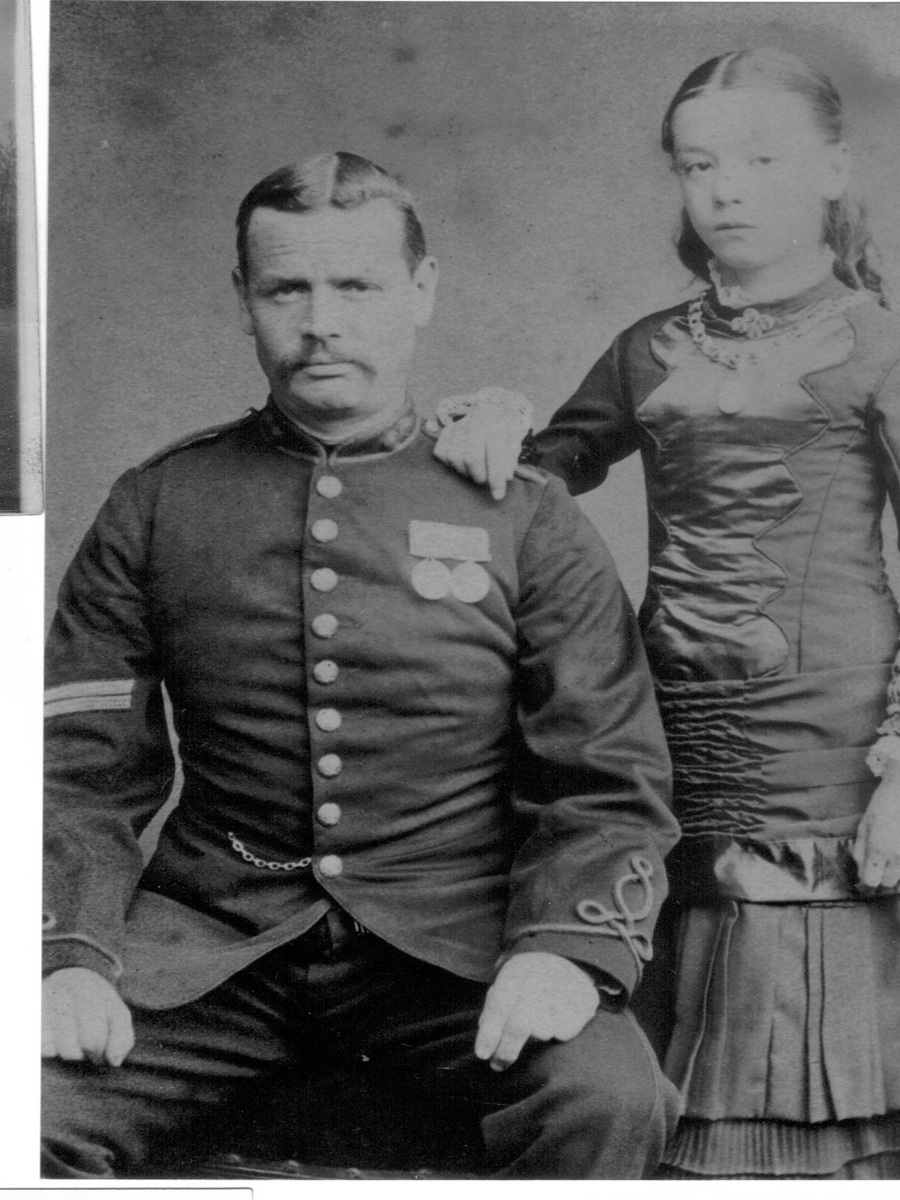
Thomas George Oakley (1847-11919) was born and lived all his life in Herefordshire. The family believe Thomas lost one toe to frostbite on the expedition.
There are photographs by photographer Thomas Mitchell in the Science Museum collection of the Nare’s expedition. You can view some here.
In Thomas’s army medical record it is says he cannot swim. The family have no details of why or how he was posted on to HMS Alert. When he left the army, he worked in road construction.
Surprisingly no other tales of Thomas’ life at sea or in the Arctic have been passed on and no other family members went to sea. Perhaps seafaring was discouraged!