
Over the last few weeks, our social media channels have been full of some great questions about the North End Shipyard and the return of the Arctic Corsair. To get you the definitive answers, we put some of these questions to Gill Osgerby, our Programme Director, and Sion Atkinson, our Capital Development Manager & Project Lead.
Part one: Introducing North End Shipyard
Question:
Where is North End Shipyard and why is it so important?
Answer:
North End Shipyard is located right on High Street, beside the River Hull just behind Hull College. It's actually the historic former entrance to Queen’s Dock, which today is Queen’s Gardens. It’s a real hidden gem of the city, and we are completely transforming it into a brand-new visitor attraction and the permanent home for the Arctic Corsair.
Question:
What can people actually expect to see and experience when they visit?
Answer:
It’s going to be an incredible experience. Visitors will walk through a bespoke Visitor Centre, see the Arctic Corsair sitting proudly in her dry dock, and view the beautifully restored and relocated historic Scotch Derrick Crane up close. Best of all, you won't just look at the ship from afar. you’ll be able to step on board and also head right down to the very bottom of the dry dock for a completely unique perspective.
Question:
What is so special about the desgn of tis new visitor centre?
Answer:
It’s actually a first of its kind for a visitor attraction in the UK. We have designed and built it to strict Passivhaus standards, making it a highly sustainable, carbon-negative construction. It also allows us to perfectly set the scene before visitors board the Arctic Corsair, which is the city's last surviving sidewinder trawler and an icon representing the city’s deep sea fishing heritage.

Part two: The journey of the Arctic Corsair
Question:
Where has the Arctic Corsair been all this time?
Answer:
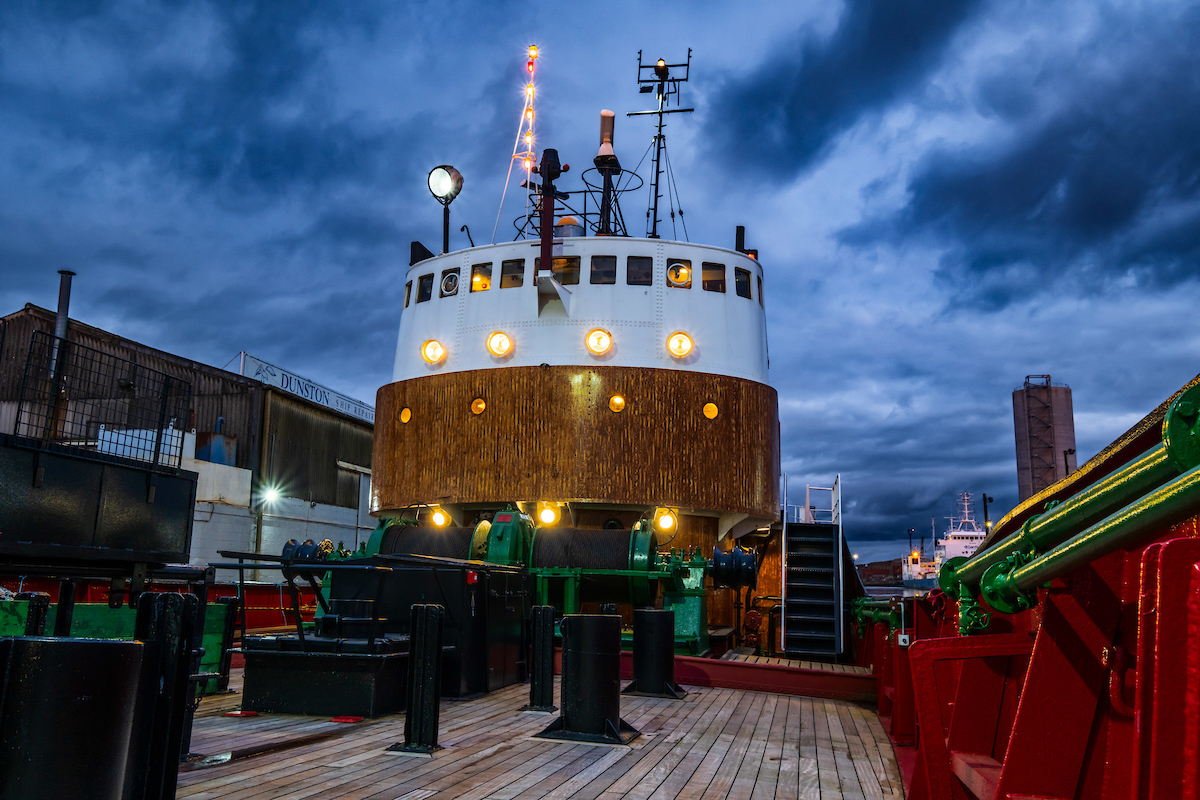
She’s been in safe hands! We removed her from her old wet berth on the River Hull where decades sitting in the silt and saltwater had really taken a toll. We handed her over to Dunstons, a fantastic local ship repair company based at William Wright Dock in Hull.
They’ve done a magnificent restoration job, putting her in excellent condition to preserve her story for the next 100 years. Bringing her back to the River Hull completes a beautiful full life cycle, as her first-ever journey back in 1960 was down this very river from her builders Cook, Welton & Gemmell who were based in Beverley.
Question:
How do you get a trawler in the dry-dock?
Answer:
It is a massive engineering puzzle that the team have been working on for years. This is no longer the type of movement regularly seen along the River Hull anymore, and the river has changed a lot from its historic peak of activity.
Because her engines no longer operate, she cannot move under her own power, so she will be towed by tugs all the way along the Humber Estuary and up the River Hull.
To make it work, we need a lot of conditions to come together. We need precise tidal heights so there is enough water to get her upstream. However, if the tide is too high, the Tidal Barrier deploys to protect the city from flooding, which blocks the route.
That gives us a very small, precise window on just a few occasions a year to make the journey. She also must safely navigate through four major bridges connecting East and West Hull, capped off with a tight 90-degree turn into the dock entrance. Because the ship is actually longer than the river is wide at this point, it’s a highly challenging, expert manoeuvre.
Question:
What is going on with the gate?
Answer:
Once our dredging is finished, we will be cutting the existing gate away from its hinges. We’ve engineered a brand-new gate with custom channels to form a completely watertight seal. We'll slide this in temporarily to block out the river silt from entering the dock.
Then, the day before the ship moves, we'll lift it out to flood the dock, bring the Arctic Corsair in, and drop the gate back down at low tide to seal her in permanently.
Once we pump the dock dry and clean it out, we’ll construct the final structural access elements, including a new visitor gangway for access onboard. While a lift and staircase will bring the public down to the dock bottom.
Part three: The dredging dilema
Question:
What are we dredging right now and why aren't we dredging the whole river?
Answer:
This dredging campaign is solely to ensure the safe arrival of the Arctic Corsair and the installation of that new gate.
Because the trawler is longer than the river is wide, we have to cut out specific silt banks to create a safe turning circle.
The main navigation channel itself is already deep enough, so we only need to clear the specific areas above Drypool Bridge to make space for that turn.
We actually ran a full trial run back in April using substitute barges with the Arctic Corsair dimensions to confirm exactly how much space we needed.
Question:
What was the original dredging plan?
Answer:
When we launched the project, we always knew dredging would be required, and all river dredging requires a licence from the Marine Management Organisation (MMO).
We originally agreed on a method with the MMO to use natural tidal currents to disperse the silt as we moved it.
However, with the project already underway, the thresholds changed regarding what was deemed an acceptable level of contamination within the silt for that approach, forcing us to completely change our strategy to a new method.
Question:
What exactly is the silt contaminated with?
Answer:
Because we are digging deep into the silt banks, we are exposing layers of material from the area’s intense industrial past.
The mud contains legacy contaminants like old oils, diesel, and heavy marine paints. To give you the technical names, we are dealing with elevated levels of Total Petroleum Hydrocarbons (TPHs) and Polycyclic Aromatic Hydrocarbons (PAHs).
Because these chemical compounds are buried currently within the silt banks, environmental laws strictly prohibit us from just letting them wash away freely into the wider river ecosystem when we uncover them.
Part four: the new approach
Question:
What is the new methodology we are using to handle this safely?
Answer:
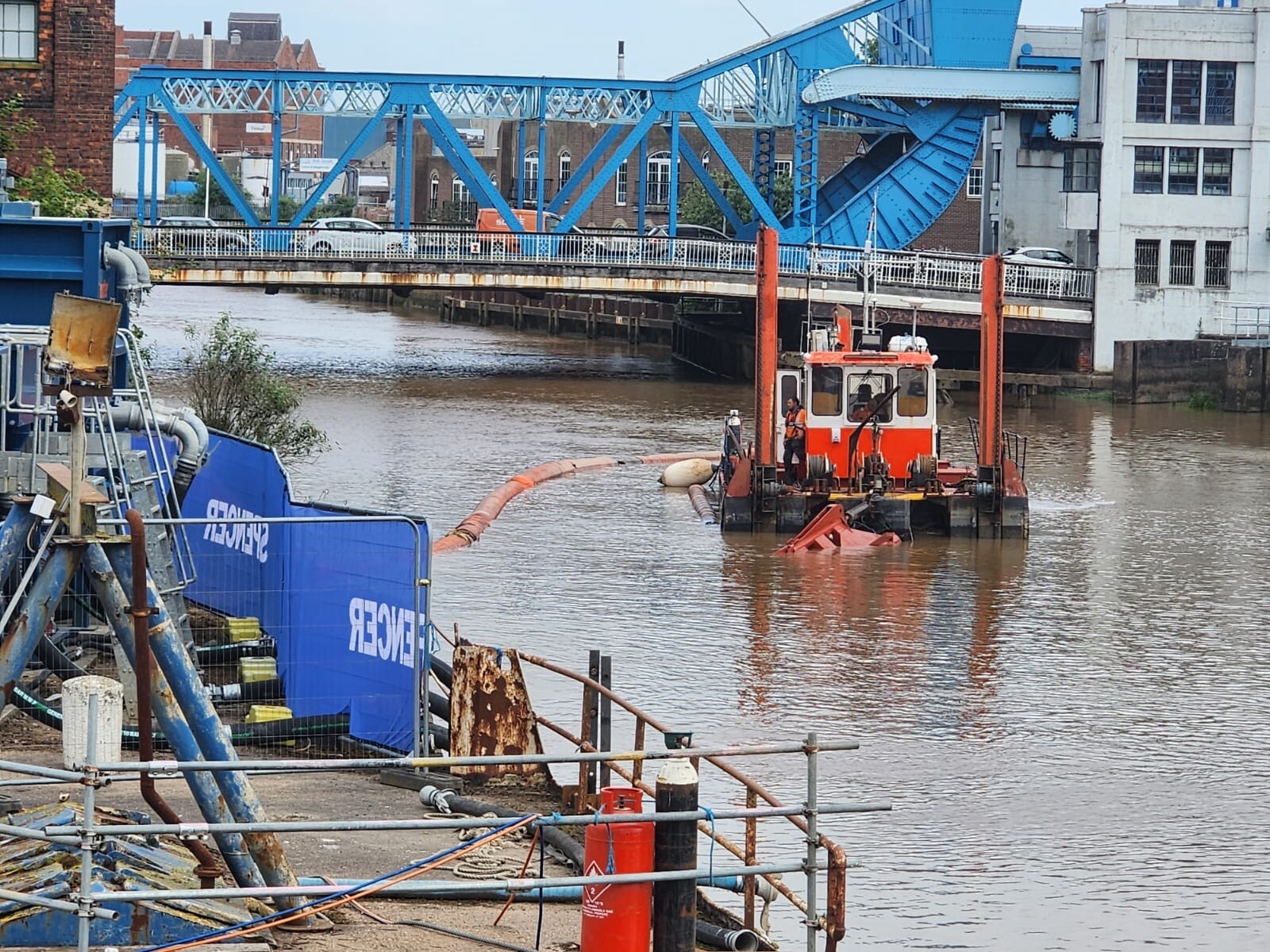
We are utilising a cutter suction dredger, which acts like a highly targeted, underwater drill bit with a vacuum attached to remove the 3,500 cubic metres of silt required. This method vacuums up a mixture that is roughly 15% solid and 85% river water.
Because of that massive volume of liquid, we needed an equally massive holding tank to separate the solids from the water, which is why we are utilising the historic North Dock right next to our dry dock. We are essentially using North Dock as a giant bathtub.
We pump the mixture in, let the heavy, contaminated solids settle to the bottom, and skim the water off the top to be filtered and returned to the river. The concentrated solid mud left at the bottom will then be dug out and trucked away to a specialist, licensed land disposal site.
Question:
What additional consents did you have to secure to pull this off?
Answer:
It meant an immense effort that was never foreseen until the change of approach was required.
Because the North Dock is a listed structure, we had to secure planning permission just to use it as a temporary holding tank.
We then had to completely empty the dock out of its existing content first to give us the ability to store our material.
And finally, to return the separated water back into the environment, we had to secure a Water Discharge Consent from the Environment Agency.
Question:
Why are you putting that water back into the river and is it safe?
Answer:
It is incredibly safe, and it's a strict condition of our Environment Agency consent to monitor the water quality.
Because the river water comes into direct contact with the contaminated silt during the vacuuming process, we have to treat it. We pass the water through advanced, specialist filtration units.
This advanced system strips out even the smallest contaminated particles, bringing the water quality back to the approved level before it is discharged right back into the river.
Part five: The future
Question:
Won't the tide just drag the silt back into that area over time?
Answer:
Yes, silt deposits are a completely natural, ongoing part of the tidal River Hull given the area’s geography, and it will return over time.
But our dredging isn't meant to clear the river forever, it is strictly to provide a temporary window of opportunity to bring the Arctic Corsair into her new home safely.
Once she is securely inside and the new dock gate is sealed, the river can return to its natural state without affecting the ship at all.
Question
What are the implications for dredging the rest of the tiver should there be a future need?
Answer:
The reality is that no two dredging campaigns are the same. Each project is entirely unique, meaning any future campaigns within the river would be subject to their own separate assessment based on their own specific location, depth requirements, and environmental finds.
Question:
Will the trawler be moved soon after the dredging is complete?
Answer:
We only have a very small number of precise tidal windows available for a move of this scale.
We are working closely with our contractors, marine experts, and the whole project team to ensure every single box is ticked before she makes the journey.
We will be announcing information on dates as soon as we are able to based on the results of the current activities.
We want the whole city to play a part, share in the excitement, and enjoy the spectacle of watching the Arctic Corsair move for the final time before welcoming them to the completed North End Shipyard site in the near future.