
Ben, a local student, spent the week with the Hull Maritime team and here is a glimpse of his week.
Last week, I had the opportunity to spend a week on work experience with the Hull Maritime team, gaining insight into the wide range of roles involved in preserving and promoting the city’s rich maritime heritage. From exploring historic sites and witnessing behind-the-scenes museum preparations, to learning about project management, funding challenges, and community engagement, each day offered something new and exciting. This experience not only deepened my understanding of Hull’s history but also showed how it is being brought to life for future generations.
Monday
Meeting the team and learning about different jobs and how they are vital in completing projects. In the afternoon, I learnt about project managing and how to take a project from development stages to a final product.
Tuesday
I went around Queen's Gardens learning about its heritage seeing the new artwork for the first time since it has been reopened and the maritime themed artworks, a nod to Hull’s heritage. Later in the day, I managed to see the Maritime Museum while it was being filled out. I saw a whale skeleton being raised and adjusted with a length of around 40ft and got to walk underneath it. During my trip I was allowed into the courtroom where they all the boxes and artefacts still left to go in. Here the curator let me hold two items. One was a spear from a famous ship called the ‘true love’ and the other a sword used to cut blubber off a whale.
Wednesday
This day I was taken to the South Blockhouse (which is personal interest due to its local history) after a talk on its history and why it is important to Hull’s heritage. In the 15th century the South Blockhouse was built along with a North Blockhouse at the north end of Hull and a castle between them connected by curtain walls all located across the River Hull from the city centre which at the time was the entire city.
It was built to stop enemies coming over the river and over running Hull which was an asset to King Henry VIII due to the trade. He decided this on his way back from being stood up in York by the current Scottish King, who we were at war with, and decided to protect Hull even more.
To begin with he asked a small town over the river if he could build walls around the area to protect Hull. Drypool denied him. So, he got his best architect to create a design allowing for canon fire in all directions and would stand against any canon attacks not only due to its shape of a clover but also its metres of thick wall. These canons faced outwards but also inward but for very good reason. Years before the blockhouses and the castle were built a rebellion against the Kings change of the country to being protestant had occurred. This had not only caused enemies across Europe and in Rome (a very powerful place at the time) which is another reason why the blockhouses were built but also a rebellion called the ‘Pilgrimage of Grace’ started by catholic citizens from York.
This had coursed through the North making people from everywhere stand up and rebel (including Hull). So, when building the Blockhouses, the King factored in another rebellion. These constant cannons were sure to keep an eye on the citizens of Hull and if ever anyone did rebel the cannons would stop it quickly. Eventually the years passed, and Hull remained untouchable by any force having the second biggest armoury in England other than London. King Charles I was now in power but not for long as he had created a civil war. The roundheads vs the parliamentarians. He had tried to rally cities before reaching Hull. He wanted access to Hull’s city, but his objective was the armoury. He reached Beverley gate and requested access but was denied by richer people, but they had most of the city behind them. This would have most likely won the King the war but instead he lost and was executed in 1649.
After the war Hull didn’t have many enemies, especially not Scotland so the North Blockhouse was taken down. It was followed by the other two at some point afterwords. The South Blockhouse was very difficult to take down so instead of using tools to bring it down they instead put loads of explosives in and blew it up. Leaving the foundations and pieces of rubble able to be dug up and visualised. Unfortunately, it couldn’t be maintained so it was covered back up and now the project is to use interpretations to tell the story of the South blockhouse, and it can tell the story of the other two as well because they can’t be dug up or projects can’t be done on them as they are underneath car parks. After I arrived at the site, I learned how the area would be interpreted and some of the uses of bringing back Hull’s heritage as it is not only for the people but for tourists too which will help bring more money to the city and improve the economy of everyone living in Hull.
After coming back, I researched the 8 stages of RIBA and their importance of completing projects. Parts to these stages can also be left and moved to be done in the next stage too. In the afternoon I went to Hepworth’s arcade and was told about how this project was developing. It helped me learn that even with projects ready and contractors confirmed without funding they just collapse and sit waiting. I learnt how difficult funding is to get and that it doesn’t all come from the council itself.
Thursday
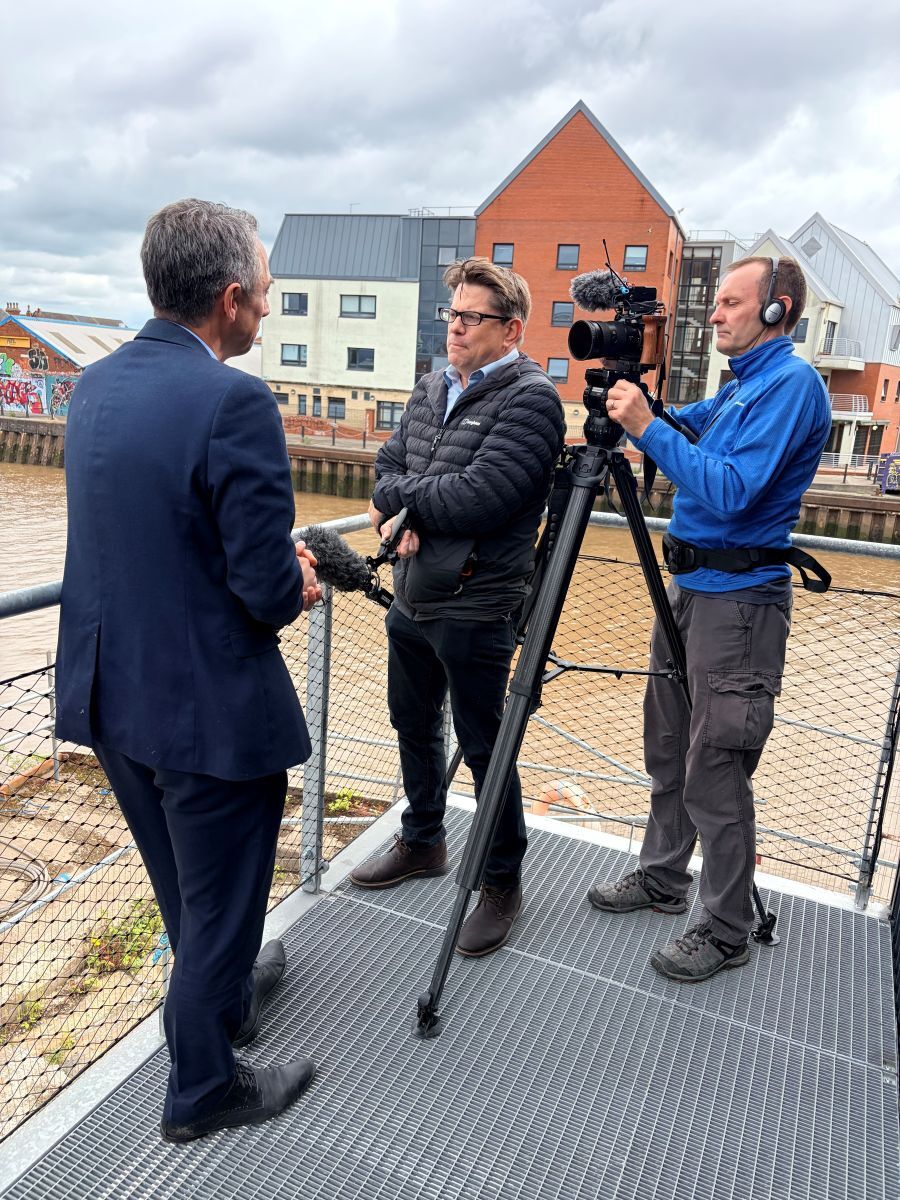
On Thursday I went to the North End Shipyard were there was a media day, and I saw people being interviewed by Look North and other news channels. Afterwards I was told about the Passivhaus which was a visitors’ centre and carbon negative. Not only this but it has used 1 kWh from the national grid but has put 21,000 kWh into it meaning it has made money by selling the power to the national grid. Later, I visited the Spurn Lightship and learnt about its history and found out it actually doesn’t have an engine but got towed to its station ‘Spurn’.
Friday
This day I spent the morning with the engagement team sorting videos between restoration and community to go into films at the maritime museum. Then I went to the storage unit to help find out how much of products there were (I also got a few freebies). Then I met up with the people who run the things to do with schools where I helped write information about a few artifacts on the whaling industry. In the afternoon, I was with the comms and marketing team where I went to the Ferrens art gallery to see the social media aspect in action while volunteers were given badges and certificates. Then I came back to the Guildhall where I wrote a Blog and watched the social media posts being written and posted.